


A chain of Dutch bed stores said on Friday it was recalling more than 1,300 Chinese-made foam mattresses amid fears they were sprayed with toxic insecticide.
Beter Bed Holding announced the recall after tests on a shipping container holding more than 700 mattresses found they contained poison, possibly as a result of being sprayed to kill insects in wooden packaging.
"Given its contents, the container ... should not have been sprayed," the company said.
It said it was destroying the shipment of 728 mattresses and recalling 1,310 from earlier deliveries, which were sold by its BeddenReus chain. Shoppers were urged to return the items to the stores for a refund.
News of possibly toxic mattresses is another blow to the already tarnished product safety record of Chinese exporters following a string of scandals including tainted dog food and toothpaste and lead paint on toys.
Beijing attempted to repair some of the damage on Friday by releasing a policy paper that touted its past food safety record and a current campaign to crack down on poor -- and potentially dangerous -- food processing practices.
Ironically, the spraying may have been part of a Chinese move to ensure exports were not infected.
"You can do that with solid stuff, but not of course with food, textiles, stuff people sleep on," Beter Bed spokesman Richard Neve said. "If you put a chemical compound on a [foam] sleeping mattress, like a sponge it fills itself up."
The mattresses were found to be tainted when Dutch government inspectors checked the container at Rotterdam port, said Jan-Jaap Eikelboom, a spokesman at the Ministry of Housing, Spatial Planning and the Environment.
"The first check showed they were poisonous, exactly what [the poison is] we still have to check," Eikelboom said.
Although the ministry has yet to deliver a verdict on what the toxic material is, Beter Bed said it believed it to be benzene, a carcinogen, and a chemical compound called ethylene dichloride.
Eikelboom said he did not know where in China the shipment of mattresses originated.
Separately, Toys "R" Us Inc on Friday said it was removing all vinyl baby bibs from its Toys "R" Us and Babies "R" Us stores as a precaution after two bibs made in China for one supplier showed lead levels that exceeded Toys "R" Us standards.
Toys "R" Us, which operates more than 1,500 stores, said the result came in testing this month of bibs supplied by Hamco Inc and marketed under the Koala Baby, Especially for Baby and Disney Baby labels.
Tests of Hamco bibs in May were within standards, Toys "R" Us said.
Vinyl bibs made by other companies have been temporarily removed to avoid any confusion among customers and allow further testing, the Wayne-based Toys "R" Us company said.
Toys "R" Us, the second-largest US toy seller after Wal-Mart Stores Inc, said customers can return any vinyl bib purchased from a Toys "R" Us or Babies "R" Us store for a full refund.

Vincent Wei led fellow Singaporean farmers around an empty Malaysian plot, laying out plans for a greenhouse and rows of leafy vegetables. What he pitched was not just space for crops, but a lifeline for growers struggling to make ends meet in a city-state with high prices and little vacant land. The future agriculture hub is part of a joint special economic zone launched last year by the two neighbors, expected to cost US$123 million and produce 10,000 tonnes of fresh produce annually. It is attracting Singaporean farmers with promises of cheaper land, labor and energy just over the border.
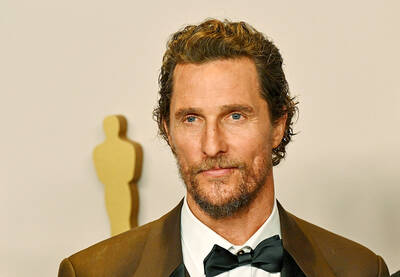
US actor Matthew McConaughey has filed recordings of his image and voice with US patent authorities to protect them from unauthorized usage by artificial intelligence (AI) platforms, a representative said earlier this week. Several video clips and audio recordings were registered by the commercial arm of the Just Keep Livin’ Foundation, a non-profit created by the Oscar-winning actor and his wife, Camila, according to the US Patent and Trademark Office database. Many artists are increasingly concerned about the uncontrolled use of their image via generative AI since the rollout of ChatGPT and other AI-powered tools. Several US states have adopted
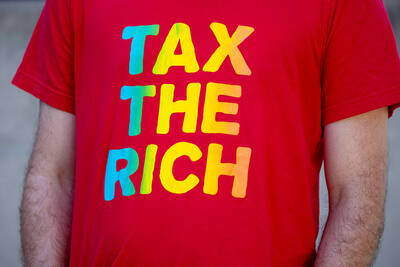
A proposed billionaires’ tax in California has ignited a political uproar in Silicon Valley, with tech titans threatening to leave the state while California Governor Gavin Newsom of the Democratic Party maneuvers to defeat a levy that he fears would lead to an exodus of wealth. A technology mecca, California has more billionaires than any other US state — a few hundred, by some estimates. About half its personal income tax revenue, a financial backbone in the nearly US$350 billion budget, comes from the top 1 percent of earners. A large healthcare union is attempting to place a proposal before

KEEPING UP: The acquisition of a cleanroom in Taiwan would enable Micron to increase production in a market where demand continues to outpace supply, a Micron official said Micron Technology Inc has signed a letter of intent to buy a fabrication site in Taiwan from Powerchip Semiconductor Manufacturing Corp (力積電) for US$1.8 billion to expand its production of memory chips. Micron would take control of the P5 site in Miaoli County’s Tongluo Township (銅鑼) and plans to ramp up DRAM production in phases after the transaction closes in the second quarter, the company said in a statement on Saturday. The acquisition includes an existing 12 inch fab cleanroom of 27,871m2 and would further position Micron to address growing global demand for memory solutions, the company said. Micron expects the transaction to


 RSS
RSS